How a Tired Dad of Three Got His Kids Off Screens Without a Single Shouting Match — in 21 Days

If you are secretly exhausted from fighting your child over screen time, dreading every "just five more minutes," or lying awake wondering if the tablet has quietly become the third parent in your house — read every word on this page.
You've tried taking the phone away. It worked for a day. Maybe two.
Then the tantrums started. Or worse — the silent treatment. The sulking that lasted longer than the screen time ever did.
You've tried the "educational apps only" rule. Somehow, within a week, it was games again. Then YouTube. Then you don't even know what.
You've tried shouting. You hated yourself for it five minutes later.
You've tried bribery. A little more screen time if they behave. It bought you peace for an afternoon. It cost you the whole system by evening.
You've downloaded the parental control apps. You've set the timers. Somehow your child, who cannot remember to pick up their shoes, can bypass every single one of them.
And underneath all of it, there's a quieter fear. That you're losing them to a screen. That the version of your child who used to run to tell you about their day is being replaced by one who barely looks up when you walk into the room.
That's not really about screens anymore. That's about connection. And connection is the thing that's actually breaking.
I know. Because I lived inside this exact problem for two years.
My Name Is Ugo Jason
I'm not a child psychologist. Not a teacher. I'm just a father of three who spent two years watching screen time quietly take over my home — and eventually found a way out of it.

When my oldest son got his first tablet, I thought I had made a smart parenting decision.
"It'll help with learning," I told myself. "It's educational." "It's better than watching TV all day."
At first, it seemed harmless. A few cartoons here. Some learning apps there. Then came the games. After that came YouTube. Before I knew it, asking for the tablet became the first thing I heard every morning.
Sound familiar?
Maybe your child wakes up asking for your phone before saying "Good morning." Maybe dinner has become impossible without a screen. Maybe you've caught yourself handing over your phone simply because you needed five minutes of peace.
Believe me, I've been there too.
As a dad of three, I understand that parenting today is very different from how our parents raised us. We didn't grow up with smartphones in our hands. We climbed trees, played football on dusty streets, rode bicycles until sunset, and invented games using stones and sticks.
Our children are growing up in a completely different world. And no one handed us a manual for it.
I read the articles. I watched the videos telling parents to "just set boundaries." I tried. It always came back to the same fight, night after night. Because nobody was explaining to me why the pull was so strong in the first place — and no punishment was going to fix something I didn't understand.
The Question That Changed Everything
One evening, after another screen-time battle left my son in tears and me feeling like a failure, I asked myself a different question. Not "how do I stop this," but "why does he need it so badly?"
That question sent me down a real rabbit hole — reading about attention, dopamine, and habit formation, and talking to a friend who works in child development about what was actually happening in my son's brain every time that screen lit up.
What I learned reframed the entire problem for me.
The Big Idea: Screens aren't the real problem. They're just the easiest source of something your child's brain is wired to chase — quick, reliable bursts of dopamine, the brain chemical behind motivation and reward.
When a child's day doesn't offer enough of those rewarding moments elsewhere — through play, connection, achievement, movement — the brain learns to go where the reward is guaranteed. The screen becomes the path of least resistance.
Taking the screen away doesn't fix that. It just removes the reward without replacing it. That's why punishment alone almost always fails — and why it comes back stronger than before.
The real fix isn't restriction. It's replacement — rebuilding a daily rhythm where connection and real-world reward come first, so the screen stops being the only thing your child's brain is chasing.
It sounds simple once you see it. But it took me months of trial, error, arguments, and a few embarrassing failures with my own kids to turn that idea into something that actually works, day to day, in a real house, with real children who do not want to cooperate.
That system is what became The D.O.P.A.M.I.N.E. Reset™.
It's natural. It doesn't involve confiscating devices overnight or declaring a screen war in your home. It takes a structured 21 days, works alongside your existing routine, and asks nothing more complicated of you than following the steps in order.
Follow it exactly, in order. Don't skip the family routines to get to the "fun part." The order is what makes it work.
The First Few Days: Almost Nothing
Day 1. We sat down and filled out the Family Digital Agreement together. My son rolled his eyes through the whole thing.
Day 2. The first replacement activity. He asked for the tablet twice anyway.
Day 3. Slightly less resistance. Or maybe I was just getting better at redirecting him.
Day 4. I almost gave up. It felt like nothing was changing. I remembered what I'd read about how habits take time to rewire, and kept going one more day.
Day 5: The First Sign
He came home from school and, for the first time in longer than I could remember, didn't ask for the tablet before greeting me. He asked what was for dinner instead. Small. But I noticed it immediately.
Day 6. Day 7. Then Something Shifted.
By day 7, the evening routine we'd built was becoming familiar to him — not a fight, just what happens after school now. By day 8, I realized I hadn't reminded him about the screen time rules once that day. He'd just... followed the rhythm.
For someone who'd been negotiating screen time every single evening for two years, forgetting to have that fight at all was the real proof something had changed.
But the real test was yet to come.
The Sunday That Told Me It Was Working
Three weeks in, we had a family game night. Nobody asked to bring a phone to the table. My daughter, who used to disappear into her room after dinner, stayed at the table telling a long, rambling story about her school day that none of us really needed to hear — and I didn't want it to end.
My son challenged me to a rematch of a card game we hadn't played in over a year. He used to only want that kind of attention from a screen.
I went to bed that night and, for the first time in a long while, didn't feel like I was losing the fight for my own children's attention.
It wasn't dramatic. It was just an ordinary Sunday evening where nobody reached for a screen. That was the whole point.
I Didn't Plan to Tell Anyone
I mentioned what we'd been doing to another dad at my son's school, mostly out of frustration one morning at drop-off. He tried it with his own kids. Then it spread — a voice note here, a WhatsApp forward there, one tired parent to another.
Same framework. Same steps. Applied by families who were just as exhausted as I was.
Why I Am Sharing This
I built this system to fix my own home. I never planned to turn it into something other parents would use.
But every time I told another parent what we'd done, I got the same reaction — relief, followed by "can you send me exactly what you did?" So I wrote it down properly: the steps, the routines, the agreement, the tracker, all of it, in the order that actually worked.
You don't need a diagnosis. You don't need to have done anything wrong. Your child isn't broken and neither are you — you were just navigating a world our own parents never had to think about, without a map.
The D.O.P.A.M.I.N.E. Reset™ System
A step-by-step family framework to break the screen-time cycle — without shouting, shame, or a single confiscated tablet.
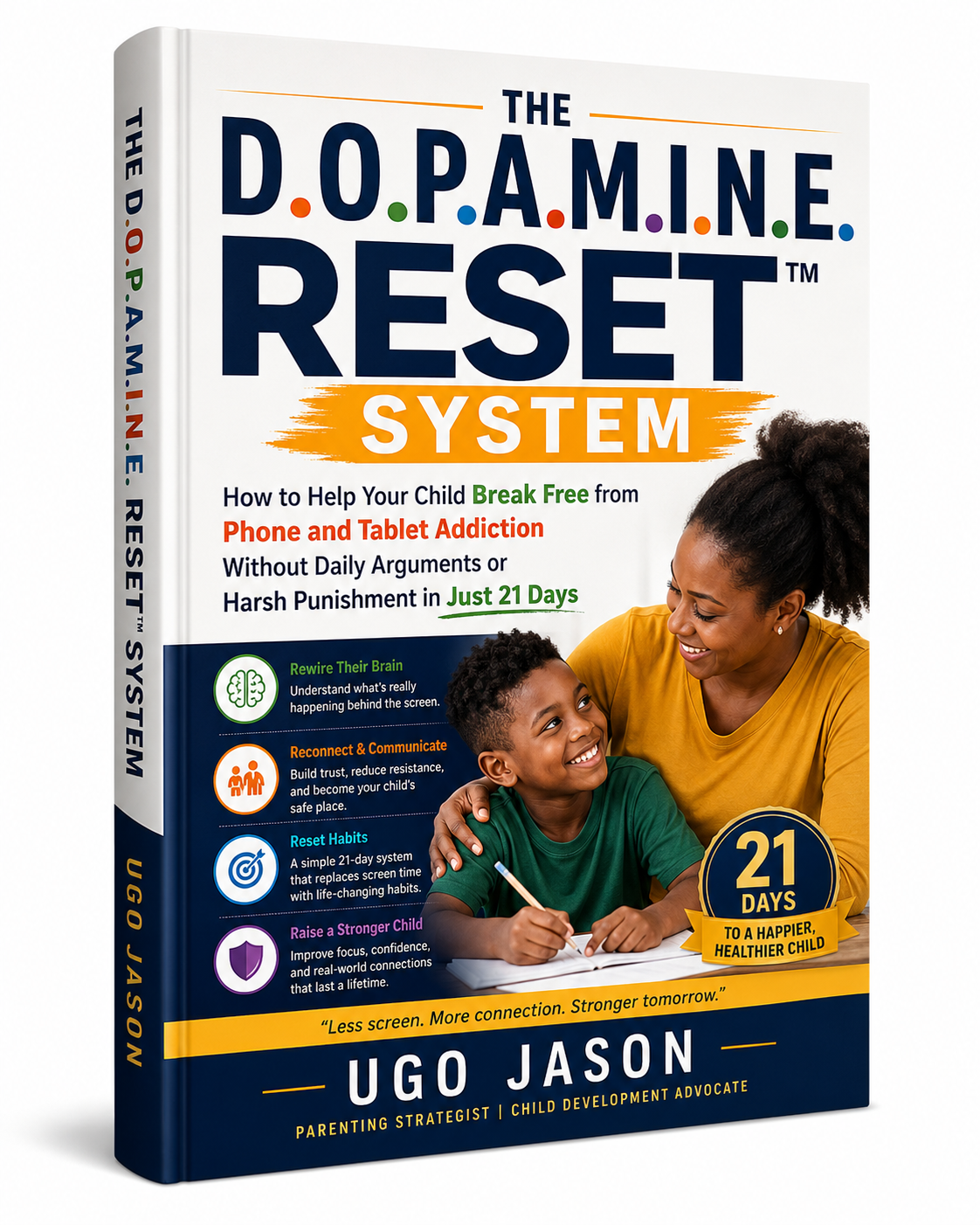
Everything I learned and built — the full 8-step D.O.P.A.M.I.N.E. Reset™ System (Discover, Observe, Pause, Activate, Motivate, Integrate, Normalize, Evaluate), documented, tested on my own three children, and written in plain language, so you can start tonight:
- The Seven Screen Personalities — discover the real reason your specific child reaches for a screen, from the Bored Explorer to the Escape Artist. (Chapter 3 — Discover)
- The Three-Minute Rule & Calm Countdown — how to interrupt screen habits without starting a war, tantrum, or shouting match. (Chapter 4 — Observe & Pause)
- The F.A.C.E. Formula™ — the replacement framework that makes real life more exciting than a screen, without bribes. (Chapter 5 — Activate & Motivate)
- Daily & Weekly Digital Routines — ready-to-use family rhythms and tech-free zones that make the new normal automatic. (Chapter 6 — Integrate & Normalize)
- Printable Family Digital Agreement — a real, fillable agreement the whole household signs together, parents included. (Chapter 6)
- The Family Adventure Jar & 20-Minute Connection Rule — ready-made answers for "I'm bored" that don't involve a device. (Chapter 5)
- The Family Progress Scorecard — track real change across 8 areas (sleep, mood, self-control, and more) — not just screen hours. (Chapter 7 — Evaluate)
- The 21-Day Digital Family Reset Plan — a week-by-week roadmap that takes you from awareness to lasting habit change. (Chapter 7)
You do not need to buy anything special or travel anywhere. Everything in this system uses things already in your home. Total cost of materials? Basically nothing — just the printable pages included in the guide.
Compare That To What You've Already Been Spending
The real cost — the one nobody puts a number on — is the distance that quietly grows between you and your child while you're both stuck in the same fight, night after night.
How Much Does This Guide Cost?
A fair price for all of that would honestly be closer to ₦8,500. But I know times are hard for most families right now. So if you take action today —
Once You Click That Button, Here Is What Happens
- You'll be taken to a secure payment page.
- Complete your payment — card, transfer, or USSD.
- Your guide is delivered to your WhatsApp and email within 60–90 seconds.
It's me, Ugo. As long as your payment is confirmed, your access is 100% guaranteed.
Wait — I Have Something Special For You
If you get the system today, you'll also receive these two bonuses at no extra cost:

Bonus #1: The 21-Day Family Digital Reset Challenge Value: ₦7,500
The full day-by-day implementation calendar — exactly what to do each day, so you're never guessing what comes next.
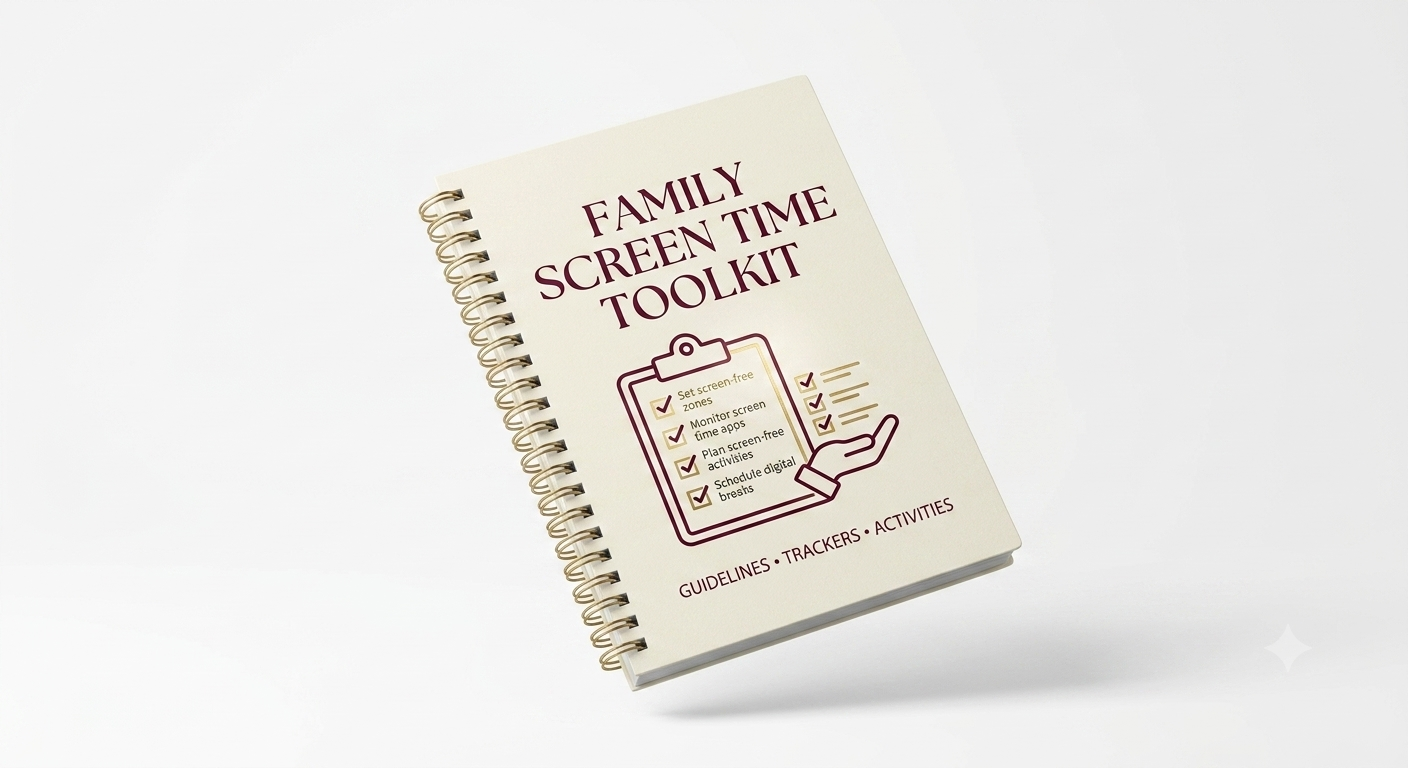
🎁 Bonus #2: Family Screen Time Toolkit Value: ₦5,000
Printable trackers and agreements to keep the whole household accountable, long after the 21 days are done.
Everything You Are Getting Today

- ✓ The D.O.P.A.M.I.N.E. Reset™ System ₦8,500
- ✓ Bonus #1: 21-Day Family Digital Reset Challenge ₦7,500
- ✓ Bonus #2: Family Screen Time Toolkit ₦5,000
Right Now, You Have Two Choices
- The same fight tonight, and tomorrow night.
- More guilt every time you hand over the tablet for peace.
- The gap between you and your child keeps widening.
- Another year of googling advice that doesn't stick.
- Nothing changes until you decide to change it.
- A clear, tested plan instead of guesswork.
- Fewer arguments, starting within days.
- Real replacement routines your child will enjoy.
- A family agreement everyone actually follows.
- Your evenings back.
Follow the 21-Day Reset as written. If you don't see a real change in your home within 30 days, email me and I'll refund you in full — no questions asked.
One Last Thing…
Picture yourself one month from today.
Will your child greet you before reaching for a device? Will dinner happen without a screen at the table? Will you feel like you're actually parenting, instead of negotiating? Will your evenings feel calmer? Will you finally stop dreading the daily fight?
Now picture yourself one month from today if you close this page. Same fight. Same guilt. Same tablet standing between you and your child.
The difference between those two versions of your family is a decision you make in the next sixty seconds.
If you've read this far and you're still on the fence — that's fair. ₦7,000 is real money, and you don't know me from a stranger on the internet.
But you already know what the current approach is costing you: your evenings, your patience, and slowly, your closeness with your child. This system is one small decision that could change all three.
You don't have to decide alone. But you do have to decide.
P.S. — Remember, this comes with a full 30-day money-back guarantee. If it doesn't work for your family, you lose nothing.
P.P.S. — The bonuses are included free for readers who order while I can still personally support new families through the WhatsApp delivery.
P.P.P.S. — Every evening you wait is another evening of the same fight. You don't have to keep having it.
With love for your family,
Ugo Jason
Frequently Asked Questions
How is the guide delivered?
Instantly, to your WhatsApp and email, within 60–90 seconds of your payment being confirmed.
Do I need to buy any special tools or apps?
No. Everything in the system uses things you already have at home, plus the printable pages included in the guide.
What if my child's screen habit is really severe?
The 21-Day Reset is designed to work for both mild and stubborn cases — the pacing just naturally takes a little longer for more entrenched habits. The framework doesn't change.
What if my partner is skeptical?
The Family Digital Agreement is built to get everyone in the household on the same page from day one, so you're not carrying it alone.
Is the guarantee real?
Yes. Follow the protocol for 30 days. If you don't see real change, email for a full refund — no questions asked.
Why is this different from generic parenting advice?
Most advice tells you to "set boundaries" without explaining why the pull toward screens is so strong. This system starts from the actual mechanism — and gives you a day-by-day plan, not just a philosophy.
Comments (0)